18 Jun 2026 · 4 min read · by Medsail Holidays Team
What Is a Blue Voyage? The Story Behind Turkey's Mavi Yolculuk Tradition
Ask any Turkish sailor where the term "Blue Voyage" comes from and they will not point you to a marketing brochure. They will tell you about a writer, a prison sentence, and a stretch of coastline so beautiful it changed the course of Turkish literature. The Blue Voyage, or Mavi Yolculuk, is not a marketing invention. It is a genuine cultural movement that happens to make an excellent holiday.
The Fisherman of Halicarnassus
The story begins with Cevat Şakir Kabaağaçlı, a writer better known by his pen name, the Fisherman of Halicarnassus. In the 1920s he was exiled to Bodrum, then a sleepy fishing town, as punishment for a newspaper article. Rather than experience exile as a punishment, he fell in love with the Aegean coastline, its sponge divers, boatbuilders, and the rhythm of a life lived close to the water.
Through the 1940s and 1950s, Kabaağaçlı wrote essays and letters celebrating this stretch of coast, and a circle of Turkish intellectuals began joining him on wooden boats to explore the bays and islands around Bodrum and Marmaris. They called these trips Blue Voyages, a name that captured both the colour of the water and the almost spiritual sense of freedom the journeys offered.
The Original Route
The earliest Blue Voyages followed a loose route between Bodrum, Gökova, Marmaris, and the Datça peninsula, stopping wherever a bay looked inviting or a ruin was worth exploring. There was no fixed itinerary and no schedule to keep. That absence of structure was the entire point: a deliberate contrast to the fast-paced, deadline-driven life the travellers had left behind in Istanbul and Ankara.
From Literary Movement to Sailing Tradition
By the 1960s, word of these trips had spread, and the wooden fishing and sponge-diving boats used along the coast were gradually adapted for passengers, gaining cabins, saloons and shaded decks. This is the direct ancestor of the modern gulet: a broad-beamed, traditionally built wooden yacht designed first for comfort and shelter, and only second for speed.
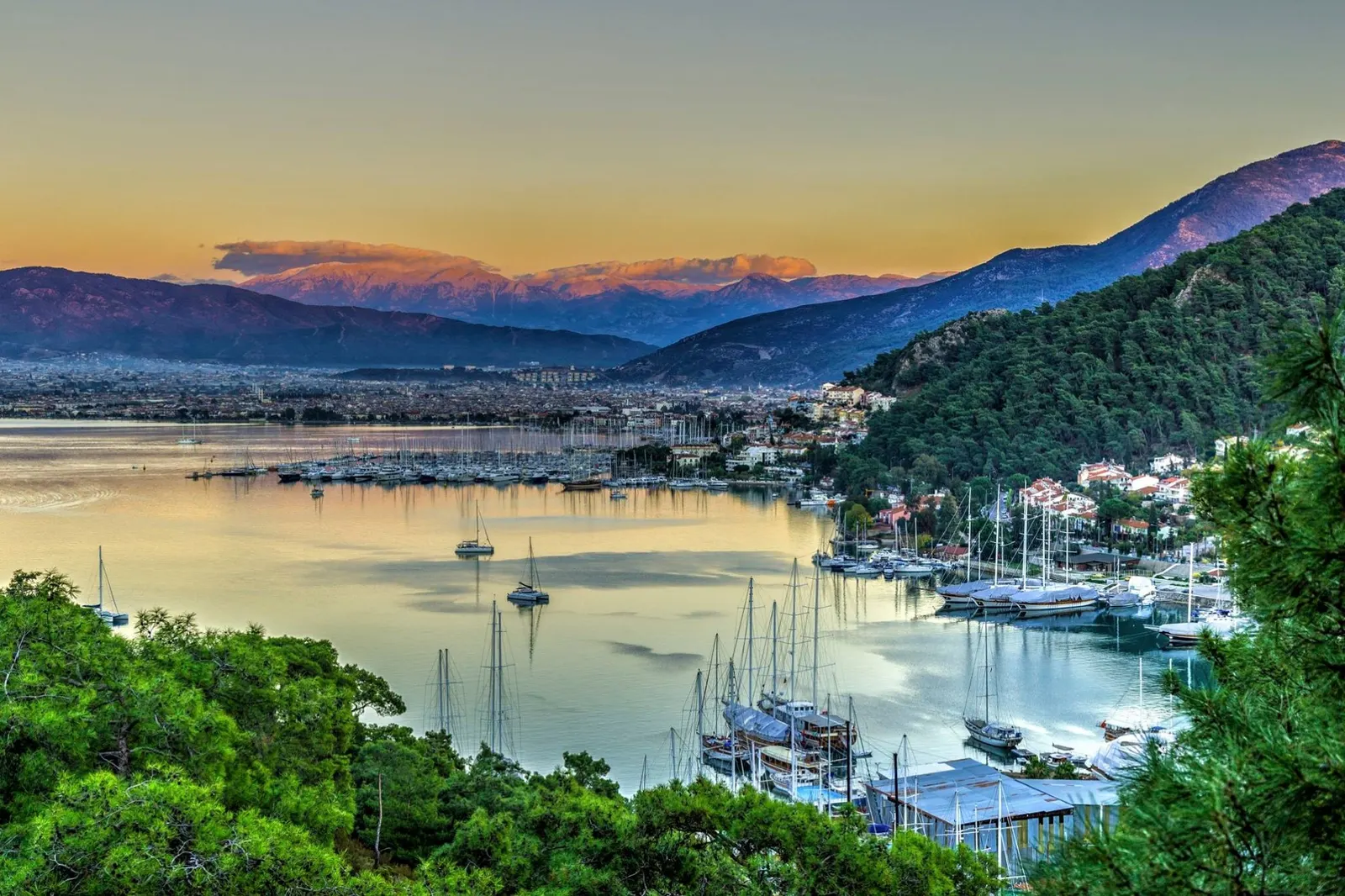
What had started as a handful of writers escaping the city became a recognised way to holiday. By the 1970s and 1980s, gulets were being built specifically for charter, and the Turquoise Coast — Bodrum, Gökova, Marmaris, Fethiye, Göcek — had become one of the Mediterranean's defining sailing destinations, all while keeping the unhurried spirit of the original voyages.
What Actually Makes a Cruise a Blue Voyage
Not every week on a gulet automatically counts as a genuine Blue Voyage in spirit. A few things distinguish it from an ordinary boat trip:
- An open itinerary. The route bends around weather, wind and how much a guest is enjoying a particular bay, rather than following a rigid, pre-printed schedule.
- Anchoring in nature, not marinas. Nights are typically spent at anchor in quiet, often uninhabited bays rather than tied up alongside in a busy harbour.
- Slow mornings. Breakfast is unhurried, swims happen before lunch, and the boat rarely gets moving before mid-morning.
- A crew, not just a charter. Traditional Blue Voyages are crewed, with a captain and cook who know the coastline intimately and can adapt the route on request.
The Philosophy: Slow Travel Before the Phrase Existed
What Kabaağaçlı and his circle stumbled onto in the 1940s is essentially what today's travel writers call "slow travel," decades before the term was coined. The Blue Voyage rejects the idea that a holiday should be a checklist of sights. Instead, the boat itself becomes the destination, and the days are structured around swimming, reading, eating well, and watching the light change over the water. Historic sites and villages are visited, but as a bonus to the rhythm of the voyage, not the reason for it.
This is worth knowing before you book a charter, because it changes what you should look for. A charter promising to tick off eight ports in seven days is not really offering a Blue Voyage — it is offering a fast-paced coastal tour on a wooden boat. A genuine Blue Voyage might visit three or four bays in the same week, with long, easy days at anchor in between.
Experiencing Mavi Yolculuk Today
You do not need to be a literary scholar to enjoy a modern Blue Voyage — you simply need to choose a route and a crew that respect the original idea. The classic circuits around Gökova, the Hisarönü and Skopea Gulfs near Fethiye and Göcek, and the waters between Marmaris and Datça all still carry the unhurried character that inspired the tradition eight decades ago.
When you step aboard a gulet in Bodrum or Marmaris today, you are not just booking a boat. You are, in a small way, continuing a tradition started by a handful of writers who discovered that the fastest way to slow down was to sail a wooden boat along a coastline with nowhere in particular to be.